

Bioculture Shelf Life and Storage: Protecting What You Paid For
A plant operator at a mid-sized pharmaceutical effluent treatment facility orders a fresh batch of bioculture. It arrives, gets logged by the store team, and gets stacked in a corner of the general chemical warehouse, not ideal, but space is tight. Three weeks later, the operator doses it into the system as planned. Everything looks normal. The mixed liquor appears active. Aeration is running. The team moves on.
Then, ten days later, the BOD levels refuse to drop. COD is climbing. The sludge volume index is off. By the time the discharge sample goes to the lab, the numbers are already in violation territory. The regulator sends a notice. The facility manager is fielding calls. And nobody, not one person on that team, suspects that the bacteria were dead long before they hit the treatment tank. Not because of anything the manufacturer did wrong. Because of what happened in that warehouse corner.
This is the invisible risk that never appears in procurement checklists. Bioculture shelf life is not just a number printed on a label, it is a countdown that begins the moment the product leaves controlled conditions. And across ETP and STP facilities in India, that countdown is being cut short every single day, silently, without anyone noticing until the biology fails.
Why Bioculture Shelf Life Matters More Than You Think
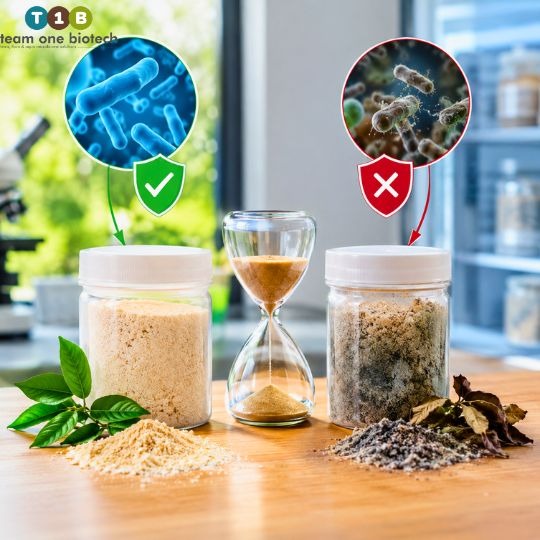
Bioculture is not a chemical. That distinction matters more than most procurement teams and store managers appreciate. When you buy a coagulant or a pH correction agent, the active ingredient is stable. It will sit in your warehouse and do its job when you need it. Bioculture does not work that way, because the active ingredient is alive.
The bacteria inside a bioculture product, whether it is a powdered consortium or a liquid formulation, have colony-forming viability that degrades over time under normal conditions and degrades rapidly under poor ones. Once the colony-forming unit count, often abbreviated as CFU, drops below a functional threshold, the bioculture will not seed a healthy microbial population in your mixed liquor. The mixed liquor is the biological heart of your system, where organic matter is broken down by active bacteria. If the bacteria you introduce are already weakened or dead, that breakdown simply does not happen at the rate your treatment system requires.
What makes this particularly dangerous is that the failure is not immediate and not obvious. A facility operator can dose a compromised batch and observe no immediate red flags. The system appears to be running. Parameters may even hold steady for a short period, supported by whatever residual biological activity exists in the system. Then, over the following days, you start seeing sluggish COD and BOD reduction. The biological oxygen demand, a measure of organic load, stops responding the way it should. The sludge volume index, which tracks how well your sludge settles and consolidates, begins to deteriorate. And then, sometimes suddenly, the system crashes.
The compliance consequence of that crash is not abstract. Facilities operating under CPCB, the Central Pollution Control Board, and state-level SPCB discharge norms have no margin for inconsistent effluent quality. A single failed discharge test can trigger a show-cause notice. Repeated violations can jeopardise your consent-to-operate, which is the regulatory authorisation that allows your facility to discharge treated effluent. For industries where uninterrupted operation is critical, pharmaceuticals, textiles, food processing, that is not a risk any manager can afford to treat casually.
At Team One Biotech, every batch we ship is tested for colony-forming viability before dispatch. But protecting that viability after it reaches your facility is equally your responsibility, and this guide is designed to help you do exactly that.
What Affects Bioculture Shelf Life, The Real Culprits
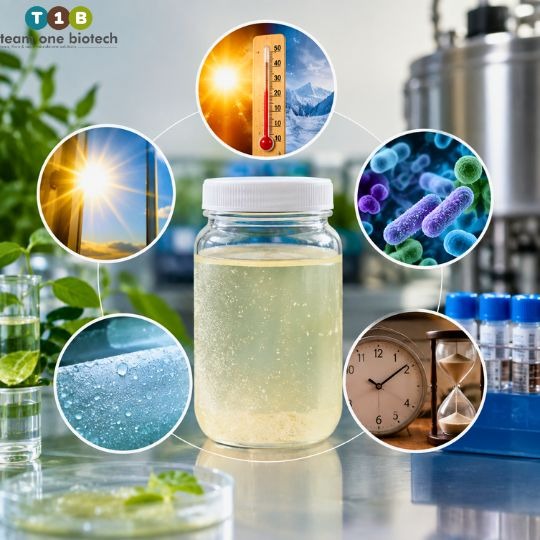
Understanding what degrades bioculture is the first step to preventing it. These are not abstract threats. They are conditions that exist in most Indian industrial facilities right now.
Temperature Fluctuations
Bacterial cultures are sensitive to temperature in both directions, and this is where most storage failures originate. Exposure to excessive heat, think warehouses without climate control in the middle of an Indian summer, can destroy bacterial cell integrity, denature the protective coatings around spore-forming species, and accelerate metabolic exhaustion. The bacteria, in simple terms, burn through their reserves and die before they are ever used.
Freezing creates a different but equally damaging problem. Ice crystal formation within or around bacterial cells can rupture membranes. Even spore-forming bacteria, which are generally more resilient, can have their germination viability compromised by freeze-thaw cycles. The practical implication is that bioculture stored near cold rooms, refrigeration units, or outdoor areas in northern Indian winters may be at just as much risk as product stored in an open warehouse in summer.
The general guidance is to store bioculture in a cool, stable, moderate temperature environment, but the specific thresholds vary by product formulation and the microbial strains included. Always refer to the product-specific storage label your manufacturer provides. What applies to one consortium formulation may not apply to another.
Disclaimer: Exact temperature storage ranges are product-specific and depend on microbial strain composition and formulation method. The above reflects general industry guidance only.
Moisture and Humidity
Powdered bioculture formulations are particularly vulnerable to humidity, and this is a significant concern given India’s monsoon seasons and high ambient humidity in coastal and eastern industrial zones. When moisture enters a powdered bioculture, it can trigger premature microbial activity. The bacteria, sensing available moisture, begin metabolic activity, and exhaust themselves before they ever reach a treatment system. The result is a product that looks intact but has already spent its biological energy.
Physical signs of moisture damage include clumping and caking, where the powder binds together and loses its free-flowing texture. This is not just an aesthetic issue, it signals that the bacterial population has likely been compromised. Liquid bioculture formulations, while sealed, can suffer secondary contamination or phase separation if packaging integrity is breached, or if they are stored in conditions that promote condensation inside the container.
Packaging Integrity
A torn seal, a pinhole in a bag, or a lid that was not properly closed after a spot inspection, these are not minor inconveniences. They are entry points for moisture, oxygen, and contaminants that can destroy bacterial viability. Train your store team to conduct a packaging integrity check on every incoming batch at the point of receipt, and again before use. Any batch with compromised packaging should be quarantined and the supplier contacted before dosing.
This is especially relevant for bioculture products that arrive in multi-layer packaging or valve-sealed bags. The outer packaging may appear intact while the inner seal is compromised. A thorough receipt inspection is not optional, it is part of your biological quality control.
FIFO Inventory Management Failures
First-In-First-Out, or FIFO, is a basic inventory principle that is routinely ignored in practice when it comes to biological products. New stock arrives, it gets placed in the front because that is where there is space, and older stock migrates to the back of the shelf. Weeks later, the older stock is either dosed past its viable period or quietly discarded, a waste that often goes untracked.
In bioculture storage, FIFO is not a logistics preference. It is a viability protection protocol. Implement it formally. Label shelves. Train your store team. Make it a condition of the store manager’s checklist. The cost of enforcing FIFO is trivial compared to the cost of dosing an out-of-date batch into a treatment system.
Storage Near Incompatible Chemicals
This is perhaps the most commonly overlooked risk in mixed-use warehouse environments. Bioculture should never be stored near disinfectants, chlorine compounds, oxidising agents, strong acids, strong alkalis, or materials containing heavy metals. The reason is that vapour and off-gassing from these substances, even from sealed containers, can penetrate bioculture packaging over time and compromise bacterial viability.
Consider the irony: a store that keeps its disinfectant and its bioculture in the same section is actively using one product to undermine the other. Dedicated, separated biological product storage is not a luxury, it is a basic requirement for protecting your inventory.
How to Store Bioculture Correctly, A Practical Facility Guide
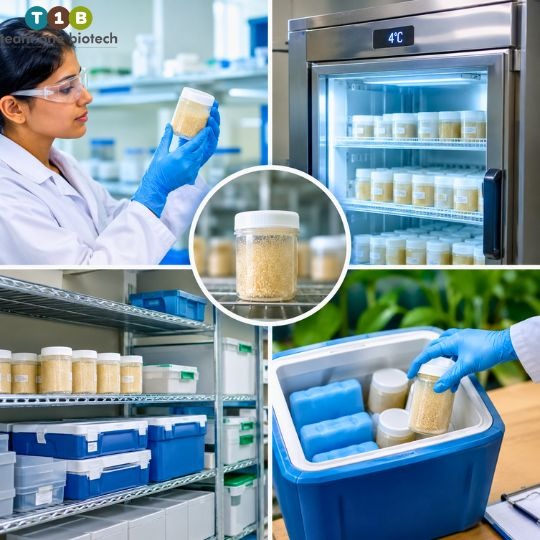
This is the section to print and put on the wall of your store room. It is not theoretical. It is what effective ETP bioculture handling looks like in practice.
1. Designate a dedicated biological product storage area.
This space should be physically separated from chemical storage. It should be cool, dry, and well-ventilated. Install a basic thermometer and check it at least once daily, more frequently during summer months. In facilities located in high-temperature regions, which includes most of peninsular and central India for a significant part of the year, consider investing in a small insulated or air-conditioned unit specifically for biological products. The capital cost is modest. The cost of a biological system crash is not.
2. Track shelf life from the date of manufacture, not the date of receipt.
This is one of the most important corrections procurement teams need to make. A bioculture batch may spend several weeks in a distributor’s warehouse or in transit before it reaches your facility. By the time it arrives, a meaningful portion of its viable shelf life may already have elapsed. Always request the date of manufacture from your supplier, and calculate remaining viability from that date, not from your goods receipt date.
3. Label and log every incoming batch without exception.
Create a storage register, physical or digital, that captures the date of receipt, batch number, manufacture date, calculated expiry date, quantity received, storage location, and the name of the person who accepted the delivery. Cross-check this register before every dose. If something does not match, pause and investigate.
4. Conduct a condition check before every dose.
Before bioculture goes into your ETP or STP, do a brief physical inspection. Powders should be free-flowing and uniform in appearance. Clumping or caking is a red flag. Liquid formulations should match expected colour and consistency, phase separation, discolouration, or cloudiness beyond the normal appearance of the product warrants a call to your supplier before dosing. Any odour that is markedly different from the typical fermentation smell, unusual sourness, putrid notes, chemical smell, should also prompt a hold.
5. Do not stockpile beyond your operational consumption cycle.
Bulk purchasing to reduce freight costs is a reasonable procurement instinct. But it becomes counterproductive when the quantity purchased exceeds what can be used within the product’s viable shelf life. Work with your supplier to calculate the correct order quantity based on your dosing schedule and the product’s shelf life. For high-volume facilities, plan staggered deliveries rather than single large orders.
Disclaimer: Optimal inventory cycles depend on plant size, treatment load, seasonal variation, and the specific bioculture formulation in use. The above guidance reflects general best practices and should be calibrated to your plant’s operating conditions with support from your supplier.
If you are unsure how to plan your bioculture inventory cycle without compromising viability, our technical team at Team One Biotech can help you build a storage and dosing schedule tailored to your plant’s biology. Reach out for a consultation.
The Hidden Cost of Improper Storage, Beyond the Wasted Product
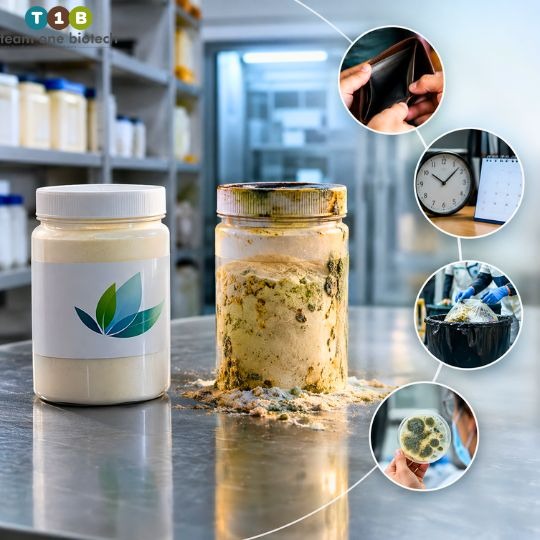
It is easy to think of a degraded bioculture batch as a product loss, unfortunate but contained. The actual cost is far larger, and it compounds in ways that are difficult to fully account for after the fact.
When a biological system crashes following a dose of compromised bioculture, the immediate task is emergency re-seeding. This means sourcing product quickly, often at short notice and at premium cost, and then waiting for the microbial population to re-establish itself in the mixed liquor. That re-establishment takes time, measured in days to weeks depending on system size and organic load. During that period, your plant may be producing non-compliant effluent. If that effluent is being discharged, you are in violation. If you are holding it, you are building up a treatment backlog that creates its own operational pressures.
The regulatory consequences that follow a CPCB or SPCB notice are not just paperwork. They require management time, legal responses, and in some cases site inspections. Persistent violations can result in consent-to-operate conditions being modified or suspended. For industries where continuous production depends on continuous effluent treatment, a suspended consent-to-operate is an existential operational risk.
There is also a subtler, longer-term consequence that plant operators and environmental engineers understand well. Repeated biological system failures erode confidence in the biological treatment approach among senior management and finance teams. The instinct that follows is to reach for chemical treatment as a backup or a replacement, heavy dosing of coagulants, flocculants, and other agents that can achieve short-term compliance but at higher operating costs, higher sludge generation, and a full retreat from the sustainability goals that made biological treatment the right choice in the first place.
And then there is the matter of accountability. When a system fails, someone has to explain why. If your storage records are incomplete, no batch logs, no receipt dates, no inspection notes, you have very little to work with when trying to determine whether the failure was a product issue, a storage issue, a dosing issue, or a system issue. Proper documentation protects you. It protects the operator. It protects the facility.
What to Ask Your Bioculture Supplier
Before you place your next order, ask these questions. A supplier who answers them clearly and confidently is a supplier you can rely on. One who cannot answer them is a risk you are carrying on behalf of your facility.
- What is the shelf life of this product, measured from the date of manufacture, under your recommended storage conditions?
- What are the specific storage temperature and humidity requirements for this formulation?
- Is batch-level viability testing data, colony-forming unit counts, available for the batch you are supplying?
- What are the physical and sensory signs of a degraded batch, and what should we do if we suspect our stock has been compromised?
- Can you support us with a staggered delivery schedule that aligns with our consumption cycle and protects shelf life?
These are questions Team One Biotech has clear, documented answers for, because we manufacture, test, and technically support every batch we supply. Talk to our technical team today.
Frequently Asked Questions
Q: What is the typical shelf life of bioculture for wastewater treatment?
Shelf life varies significantly by product formulation and the specific microbial strains included. Liquid cultures generally have a shorter viable window than stabilised powder formulations. Always confirm the manufacture date and cross-check it against the storage requirements specified on the label. When in doubt, ask your supplier for batch-specific documentation.
Disclaimer: Any shelf life ranges mentioned in general guidance are indicative. Actual viability depends on the specific product, its formulation, storage conditions, and microbial strain composition. Always refer to product-specific documentation.
Q: Can I freeze bioculture to extend its shelf life?
Freezing is generally not recommended unless the product has been specifically formulated and validated for frozen storage. Freezing can rupture bacterial cell walls and disrupt spore integrity, leading to significant viability loss. Do not attempt non-standard storage without explicit guidance from your supplier.
Q: How do I know if my bioculture has gone bad?
For powder formulations, clumping, caking, or an off-colour appearance are warning signs. For liquid formulations, look for phase separation, unexpected discolouration, or unusual odour beyond the normal fermentation smell. When any of these signs are present, do not dose, contact your supplier for guidance.
Q: Does bioculture need refrigeration?
This depends entirely on the specific product. Some formulations benefit from cool storage without requiring refrigeration. Others are designed for ambient storage within a defined temperature range. Temperature extremes in both directions carry risk. Always follow the manufacturer’s label, and never assume that colder is safer.
Storage Is Part of the Treatment
The bacteria you purchase are not consumable in the way that a reagent or a filter medium is a consumable. They are a working biological population that you are taking custody of from the moment they arrive at your gate. From that moment forward, your storage conditions, your inventory practices, and your handling protocols are directly responsible for whether those bacteria arrive at your treatment system alive, functional, and ready to do the work you bought them for.
Facilities that get this right do not just protect a product purchase, they protect their biological system’s long-term performance, their compliance track record, and the entire logic of choosing biological treatment over a chemical-heavy alternative. Bioculture storage is not a back-of-house logistics matter. It is a front-line plant performance decision.
Team One Biotech does not just supply bioculture, we support the biology of your plant from procurement to performance. If you want to review your current storage practices, build a compliant bioculture inventory system, or simply understand whether your existing stock is still viable, speak to our team. We are here to help your plant stay healthy, stay compliant, and stay chemical-free.
Looking to improve your ETP/STP efficiency with the right bioculture?
Talk to our experts at Team One Biotech for customised microbial solutions.
Contact: +91 8855050575
Email: sales@teamonebiotech.com
Visit: www.teamonebiotech.com
Discover More on YouTube – Watch our latest insights & innovations!-
Connect with Us on LinkedIn – Stay updated with expert content & trends!